




Your business is posting on Instagram, Facebook and LinkedIn, but where are the customers? You spend time creating graphics, writing captions, sharing offers and checking likes, yet your enquiries remain inconsistent. Meanwhile, competitors appear more active, their content looks professional, and potential customers seem to notice them first. It can be frustrating to watch your marketing activity increase without seeing the business growth you expected.
The problem may not be that social media does not work for your business. The real issue could be the absence of a clear strategy connecting your content with your target audience, brand positioning and business goals. Social media management is not simply about publishing posts every day. It is about creating meaningful communication, building relationships, understanding audience behaviour and turning attention into measurable opportunities.
For businesses looking to strengthen their online presence, professional social media management services in Delhi NCR can help bring structure, consistency and direction to their marketing efforts.
Why Is Your Business Getting Likes but Not Enough Enquiries?
Imagine a salon in Delhi that regularly posts attractive hairstyles, festive offers and customer transformations. Its Instagram account looks active, but very few people book appointments through social media. The owner assumes that more posts will solve the problem and starts publishing content almost every day.
After several weeks, the situation remains unchanged. The account receives occasional likes, but potential customers do not ask about prices, available appointments or services.
This situation highlights an important difference between social media activity and social media performance. A post can attract attention without giving the audience a compelling reason to take action. If the content does not address customer needs, communicate the business’s value or provide a clear next step, engagement may never develop into enquiries.
Your audience needs more than promotional graphics. People want useful information, answers to their questions, evidence of quality, relatable stories and confidence that your business understands their needs.
An effective social media strategy identifies what customers care about and creates content around those concerns. Instead of publishing random offers, a salon could share hair-care advice, explain different treatments, showcase genuine transformations with permission, answer common questions and make appointment booking simple.
The same principle applies to restaurants, real estate agencies, healthcare businesses, educational institutes, retailers and professional service providers.
Why Social Media Management Matters for Business Growth
Social media platforms give businesses an opportunity to communicate directly with potential customers. However, the value of that opportunity depends on how effectively the business uses it.
When your brand communicates consistently, customers can become more familiar with your products, services and expertise. Educational posts can answer questions before a customer contacts you. Behind-the-scenes content can make your business feel more approachable, while genuine testimonials and project examples can help reduce uncertainty.
Over time, these interactions can support brand awareness, customer relationships and lead generation. However, results depend on factors such as audience relevance, content quality, competition, offer strength and the customer experience after someone clicks or enquires.
Social media should therefore be treated as part of a wider marketing system rather than an isolated activity. Your website, landing pages, customer service, paid advertising and follow-up process should support the same business objective.
For example, a real estate consultant operating in Noida might publish educational content about home-buying considerations, neighbourhood comparisons and property documentation. Interested viewers could then visit a relevant website page or contact the business for further information. The content educates the audience while creating a natural opportunity for a business conversation.
What Does Professional Social Media Management Include?
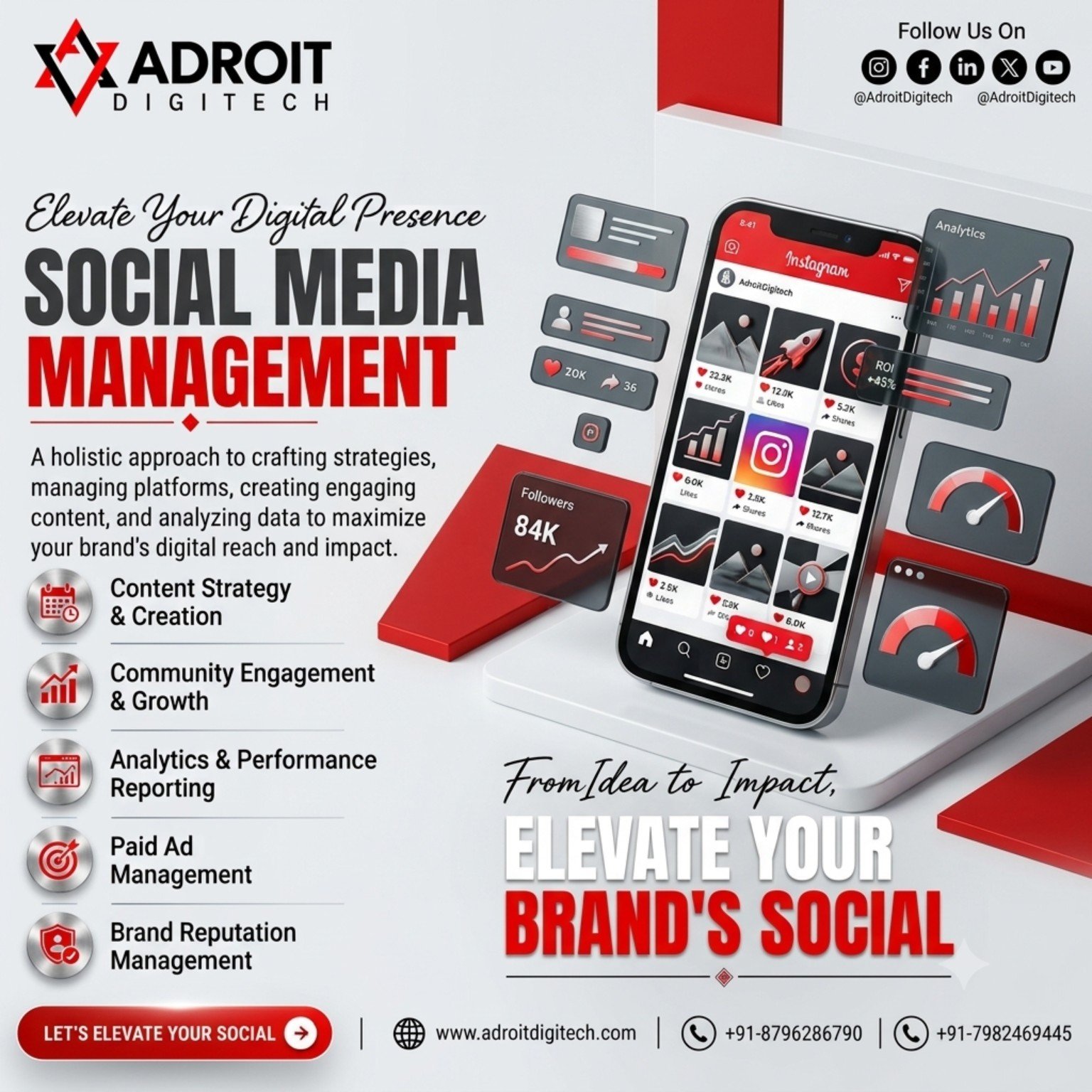
Professional social media management combines planning, content creation, publishing, audience interaction and performance analysis. The exact scope varies by business, but the objective is to ensure that every activity serves a clear purpose.
Social Media Content Strategy and Creation
Content strategy begins with understanding your business, audience, services, competitors and goals. Before designing a post, the marketing team should identify the intended audience, the problem being addressed and the action the reader should take.
A balanced content plan can include educational posts, service explanations, customer questions, industry insights, brand stories, product demonstrations and promotional campaigns. Each format serves a different purpose. Educational content helps establish relevance, while promotional content explains why a customer might choose your business.
Visual quality also matters. Consistent typography, colours, imagery and brand messaging help make your business recognisable. However, attractive design alone cannot compensate for unclear messaging. A professionally designed post should communicate its main idea quickly and make the next step easy to understand.
Community Engagement and Audience Growth
Publishing content is only one part of social media management. Customers may comment on a post, send direct messages, ask about prices or request more information. Responding thoughtfully can help turn these interactions into useful conversations.
Community management involves monitoring comments and messages, answering appropriate questions, acknowledging feedback and identifying recurring customer concerns. These interactions also provide valuable insight into what your audience wants to know.
Audience growth should focus on reaching relevant people rather than collecting followers who are unlikely to become customers. A smaller, interested audience can be more commercially useful than a large audience with little connection to your services.
Analytics and Performance Reporting
Without performance analysis, businesses may continue investing in content that does not support their objectives. Social media analytics help identify which topics attract attention, which formats encourage interaction and which campaigns generate meaningful enquiries.
Useful metrics can include reach, impressions, engagement rate, profile visits, link clicks, video watch time, qualified enquiries and conversions. The most relevant measures depend on the campaign objective.
If your goal is brand awareness, reach and relevant audience exposure may be important. If your goal is lead generation, qualified enquiries, cost per lead and lead quality deserve greater attention.
Reporting should explain what happened, why it may have happened and what the business should test next. A useful report leads to better decisions rather than simply presenting numbers.
Paid Social Media Advertising
Organic content and paid advertising serve different but complementary roles. Organic content helps build an ongoing presence, while paid campaigns can introduce your business to selected audiences and test specific offers or messages.
Effective social media advertising begins with a defined objective, an appropriate audience, a clear offer and a relevant destination. Depending on the campaign, that destination might be a landing page, a lead form, a product page or a messaging conversation.
Businesses should assess campaign performance beyond clicks. A campaign that generates many enquiries may still be inefficient if those enquiries are irrelevant or fail to convert into customers. Tracking lead quality and sales outcomes helps determine whether advertising is contributing to business growth.
Brand Reputation Management
Your brand reputation develops through the experiences people have with your business and the way you respond to feedback. Social media gives customers a public place to ask questions, express concerns and share their experiences.
Professional reputation management involves monitoring relevant conversations, responding respectfully and directing sensitive matters into appropriate private channels when necessary. Genuine negative feedback should be handled constructively rather than dismissed or hidden without a valid reason.
Businesses should never manufacture testimonials or promise outcomes they cannot substantiate. Transparent communication and consistent customer service provide a stronger foundation for long-term trust.
How Adroit Digitech Approaches Social Media Management
At Adroit Digitech, social media management can be approached as a coordinated process designed around a business’s audience, services and marketing objectives. Instead of treating every post as a separate task, the focus is on connecting content, communication and performance measurement.
The process begins with understanding what the business offers, who it wants to reach and what currently prevents its social media presence from generating better results. This assessment helps identify opportunities in messaging, content quality, publishing consistency, audience engagement and campaign structure.
Based on those priorities, the content plan can combine informative posts, brand-focused creatives, service highlights and relevant promotional campaigns. Each piece of content should have a clear purpose, whether that is answering a customer question, explaining a service, strengthening brand recognition or encouraging an enquiry.
Platform selection should also reflect the audience. Instagram may be appropriate for visually driven brands and product discovery. Facebook can support community communication and suitable advertising campaigns. LinkedIn may be more relevant for B2B services, professional expertise and business networking.
The strategy should not assume that every platform requires identical content. Messages, formats and publishing approaches can be adapted to the audience and the strengths of each platform.
Performance reviews then help determine what deserves improvement. If a post receives attention but few profile visits, its message or call to action may need review. If a campaign attracts enquiries but produces few qualified leads, the audience, offer, form questions or follow-up process may require adjustment.
This approach connects content creation with practical business decisions instead of treating social media as a checklist of posts to publish.
Practical Social Media Strategy: What Should Your Business Post?
One of the most common challenges business owners face is deciding what to publish consistently without repeating the same promotional message. The solution is to build content around the questions, concerns and decisions that influence customers.
For example, a website development company could explain common website mistakes, demonstrate how mobile usability affects visitors, discuss website maintenance and showcase completed projects with accurate supporting details. These subjects help potential customers understand the service before making an enquiry.
A fashion retailer could demonstrate product styling, explain fabric care, answer sizing questions and present new collections. A coaching institute could address student concerns, explain its teaching approach and share verified course information.
The content should reflect the actual business and the questions customers ask. A practical way to develop ideas is to review customer messages, sales conversations, frequently asked questions and feedback. These sources often reveal more useful topics than choosing subjects solely because they are trending.
A sustainable publishing schedule is also important. Businesses should choose a realistic frequency that allows sufficient time for research, creative development, review and engagement. Consistency means maintaining a dependable process, not publishing low-quality content simply to meet a daily quota.
Each post should also have a suitable next step. Depending on the purpose, that might be saving the post, sharing it, visiting a website, requesting a quotation or contacting the business. Not every post needs a sales message, but the overall content strategy should guide interested people towards a relevant action.
Common Social Media Management Mistakes That Waste Time and Budget
Posting without a defined audience is one of the most costly strategic mistakes. When content attempts to appeal to everyone, it often fails to address the specific needs of the customers most likely to purchase. Clear audience segmentation makes it easier to create relevant messaging.
Another mistake is focusing exclusively on likes and follower counts. These figures can indicate attention, but they do not automatically prove that the business is generating revenue or attracting qualified prospects. Performance should be evaluated against the original objective.
Irregular publishing can also weaken a brand’s communication process. Long periods of inactivity followed by several promotional posts may make the account feel inconsistent. A manageable content calendar helps maintain a more dependable presence.
Ignoring comments and messages creates another problem. Someone asking about service availability or pricing may be demonstrating genuine interest. Slow or unclear responses can introduce unnecessary friction into the customer journey.
Businesses can also waste advertising budgets by launching campaigns without proper conversion tracking, testing or a clear offer. Before increasing spending, review whether the audience is relevant, the creative communicates value, the destination works correctly and enquiries are being followed up.
Finally, copying competitors without understanding their strategy rarely creates a distinctive brand. Competitor analysis can reveal market expectations, but your content should communicate your own strengths, expertise and customer value.
How to Choose the Right Social Media Management Company
Choosing a social media management company requires more than comparing the number of posts included in a monthly package. Businesses should first establish what they want to achieve and then assess whether a provider’s approach matches those objectives.
Ask how the company researches your audience, develops content themes, selects platforms and measures performance. A credible provider should be able to explain the reasoning behind its proposed strategy rather than promising guaranteed sales or viral reach.
Review relevant work samples and case studies carefully. Look for clear examples of content quality, campaign objectives and documented results. Any reported business outcomes should be supported by genuine evidence, and you should be able to distinguish verified performance from illustrative examples.
It is also important to clarify the scope of service. Content strategy, graphic design, video production, publishing, community management, paid advertising and reporting may be priced separately or combined in a package. Confirm which activities are included, how revisions work, who approves content and how quickly messages will be handled.
Discuss access and ownership before work begins. Your business should maintain appropriate control of its social accounts, advertising assets and business data. Reporting arrangements should also make it possible to understand what the provider has done and how performance is being assessed.
Most importantly, choose a partner that understands your business objectives and communicates honestly about what can and cannot be predicted. Social media performance depends on several variables, so a transparent testing and improvement process is more credible than unrealistic guarantees.
Social Media Management Services in Delhi and Delhi NCR
Delhi NCR includes businesses operating across different industries, customer segments and competitive markets. A neighbourhood restaurant, a B2B consultancy, a retail showroom and a real estate agency do not need the same social media strategy. Their audiences, purchase decisions and preferred communication styles can differ significantly.
For businesses in Delhi, New Delhi, Dwarka, Rohini, Laxmi Nagar, Connaught Place and other parts of the capital, social media content can reflect relevant services, customer questions and local business context. Companies operating in Noida, Greater Noida, Gurugram, Faridabad and Ghaziabad can also tailor their communication to the areas and customer groups they genuinely serve.
Local relevance should be meaningful rather than repetitive. A service business might explain how its process works for local customers, answer area-specific service questions or showcase a verified project from a relevant location. Simply inserting multiple city names into captions does not create a useful local strategy.
Businesses seeking social media management services in Delhi NCR should therefore look for a provider that can understand their market, maintain consistent brand communication and connect marketing activities with their actual business goals.
For local discovery through Google, social media should complement a well-maintained website and an accurate Google Business Profile where eligible. Keep contact details consistent, provide useful service information and make it easy for potential customers to understand what your business offers. These activities support the wider customer journey, although social media activity alone does not guarantee higher Google rankings.
How Much Do Social Media Management Services Cost?
The cost of social media management depends on the work required, the number of platforms, the volume and complexity of content, video production needs, engagement responsibilities, reporting requirements and whether paid advertising is included.
A business requiring a basic content calendar and static graphics will have different needs from a company requiring short-form video production, daily community management, multiple campaign creatives and ongoing advertising optimisation.
Before requesting a quotation, define your objectives, target audience, preferred platforms and available resources. Ask for a written breakdown of deliverables, publishing frequency, revisions, reporting, additional production costs and advertising spend.
It is important to distinguish the management fee from the advertising budget. If paid campaigns are included, confirm how media spending is allocated and reported. The appropriate investment should reflect the business’s goals, financial capacity and ability to convert enquiries into customers.
Adroit Digitech can discuss your requirements and help you identify a suitable scope of social media management services. A tailored quotation is more useful than assuming every business needs the same package.
Frequently Asked Questions About Social Media Management Services
What are social media management services?
Social media management services involve planning, creating, publishing and monitoring content across relevant social platforms. Depending on the agreement, they may also include community engagement, audience growth strategies, paid advertising, brand reputation management and performance reporting.
Why should a business hire a social media management company in Delhi?
A business may benefit from professional support when it lacks the time, skills or internal resources to manage content consistently. A suitable provider can help organise the strategy, improve communication, monitor performance and identify opportunities to reach relevant audiences in Delhi and surrounding markets.
How often should a business post on social media?
There is no universal posting frequency that guarantees success. The appropriate schedule depends on the platform, audience, business objectives and available production resources. A realistic, consistent schedule with useful content is generally more sustainable than publishing frequently without a clear purpose.
Can social media management generate business leads?
Yes, social media can contribute to lead generation through relevant content, targeted campaigns, clear calls to action and an effective enquiry process. Results depend on the offer, audience, competition, budget, landing page or messaging experience and the business’s follow-up process. Lead generation should be measured by enquiry quality and business outcomes, not just engagement.
Are paid advertisements included in social media management?
Not always. Some service packages include campaign planning and management, while others charge separately for paid advertising. Confirm whether campaign setup, creative production, optimisation, reporting and advertising spend are included in your quotation.
Which social media platforms are best for my business?
The right platforms depend on your target customers, industry and objectives. Instagram may suit visually driven businesses, LinkedIn may suit B2B companies and professional services, and Facebook may support relevant community and advertising activities. Platform selection should be based on audience fit rather than popularity alone.
Do social media management services help with local business visibility?
Social media can help local businesses communicate their services, demonstrate expertise and reach relevant audiences. It can complement local SEO, a useful website and an accurate Google Business Profile, but it does not guarantee Google rankings or placement in local search results.
How can I measure whether my social media strategy is working?
Choose metrics that reflect your objective. Brand awareness campaigns may prioritise reach, while lead generation campaigns should assess qualified enquiries, conversion rates and cost per lead. Review results regularly and use the findings to improve content, targeting and the customer journey.
Turn Your Social Media Presence into a Clear Business Strategy
Your business does not need more content simply for the sake of staying active. It needs content that communicates value, answers customer questions, builds trust and gives the right audience a reason to take the next step.
When content strategy, community engagement, analytics, paid advertising and brand reputation work together, social media becomes a more structured part of your marketing process. Progress should be evaluated through relevant performance data, customer feedback and business outcomes rather than assumptions about what looks popular.
Adroit Digitech offers an opportunity to discuss how a more organised social media approach could support your business objectives. Whether you want to improve content consistency, strengthen brand communication, reach relevant audiences or develop a more measurable lead-generation process, the first step is understanding your current challenges and priorities.
Ready to elevate your brand’s social media presence?
Contact Adroit Digitech to discuss your social media management requirements, preferred platforms and business goals.
Website: https://www.adroitdigitech.com/
Call or WhatsApp: +91-7982469445 | +91-8796286790
Let’s build a social media strategy that connects your brand with the right audience and supports meaningful business growth.
